

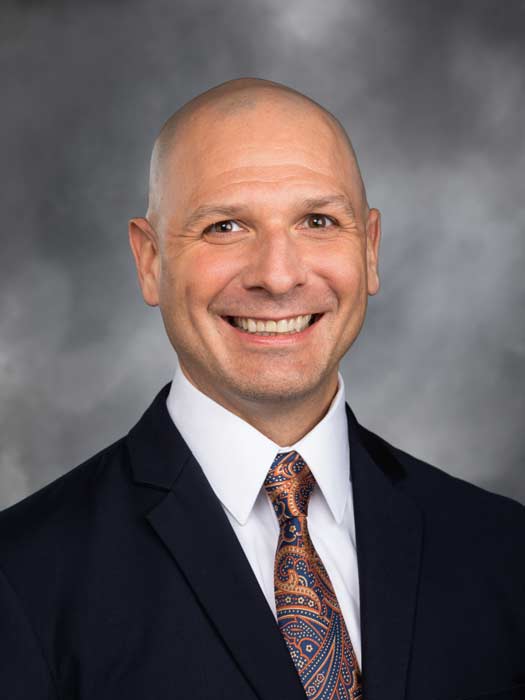
District 20 Representative Peter Abbarno
By Peter Abbarno
For the C-C Chamber of Commerce
As students across Washington head back to school, there is a familiar excitement in our communities. Backpacks are filled, school buses return to the roads, fall sports begin, and classrooms are again filled with students ready to learn.
As a parent, community member, and state legislator, I believe few responsibilities are more important than preparing the next generation for success.
Education changes lives. A quality education gives students the foundation to attend college, enter an apprenticeship, learn a skilled trade, serve in the military, start a business, or begin a career. Strong schools create opportunities, strengthen families, and build stronger communities.
Washington is fortunate to have tremendous teachers, paraeducators, bus drivers, counselors, coaches, administrators, and volunteers dedicated to our students. Supporting them also requires honestly evaluating whether our education system is producing the results our students deserve.
Our students deserve more than the status quo.
The numbers show why improvement must be a priority. On Washington’s 2025 state assessments, 70.9% of students demonstrated foundational grade-level knowledge or above in English language arts and 63.3% did so in math. However, the more traditional Level 3 or 4 standard; those students on track for college-level learning without remediation is considerably lower: 50.9% in ELA and 40.7% in math.
There are successes, too. Among Washington students who took the SAT in 2025, 51% met both the reading/writing and math college-readiness benchmarks, compared with 39% nationally. We should acknowledge where students succeed while recognizing that too many are still being left behind.
Our commitment to education should not be measured simply by how much government spends, but by how well students succeed. However, there should be great concern when those cuts are in areas most impactful in the classroom and to the students.
I was concerned about several decisions made by the majority party and governor during the 2026 legislative session. The final supplemental budget reduced Transition to Kindergarten by approximately $27.3 million and Local Effort Assistance by approximately $25.1 million, affecting support for districts with less capacity to raise local levy dollars. Changes to school-bus depreciation reduced payments by approximately $25.8 million, and Running Start was reduced by approximately $7 million.
Those aren’t abstract numbers. They represent opportunities for students and resources for local schools.
Running Start is one of Washington’s education success stories. Students can simultaneously earn high school and college credit, challenge themselves academically, and save their families thousands of dollars in future college costs. Beginning this school year, the Legislature reduced the combined maximum funded enrollment available to Running Start students from 1.4 to 1.3 full-time equivalent for the 2026–27 and 2027–28 school years.
At a time when families are struggling with affordability, we should expand opportunities that save families money; not restrict them. In 2027, we should restore that opportunity.
We should also strengthen Career and Technical Education. College is an excellent path, but it isn’t the only path to success. Apprenticeships, construction, manufacturing, health care, agriculture, technology, public safety, and the skilled trades offer rewarding, family-wage careers. Students should have opportunities to explore those careers, earn industry-recognized credentials, and graduate with skills employers need.
We must continue improving special education funding. The Legislature has made important bipartisan progress, including increased funding and removal of the special-education funding enrollment cap. But our obligation does not end there. When the state does not cover actual special-education costs, districts must use local levy dollars and other resources to fill the gap.
Students need more education dollars closer to the classroom. Before Olympia creates another administrative requirement or expands bureaucracy, we should ask a simple question: Will this help a student learn?
Our priorities should be teachers, paraeducators, special education, classroom materials, student safety, transportation, literacy, mathematics, and programs with measurable results.
Finally, and most importantly, we must recognize parents as essential partners. Parents are a child’s first and most important teachers. They deserve transparency about curriculum, academic progress, attendance, safety, and the services their children receive.
Strong schools don’t push parents away, they invite them in.
In 2027, our agenda should be clear: restore Running Start, strengthen early literacy and kindergarten readiness, expand CTE and skills centers, meet special-education obligations, address chronic absenteeism, protect levy equalization, and direct more resources toward classrooms and student outcomes.
These shouldn’t be Republican priorities or Democratic priorities. They should be Washington priorities.
Washington has incredible students, talented educators, innovative employers, and communities that care deeply about their schools. We have everything necessary to build one of America’s best education systems.
Every student deserves high expectations. Every student deserves opportunity. And every student deserves an education system focused on helping them succeed.
Rep. Peter Abbarno,
Peter Abbarno, Attorney and Partner at Althauser Rayan Abbarno, and State Representative in the 20th Legislative District.