

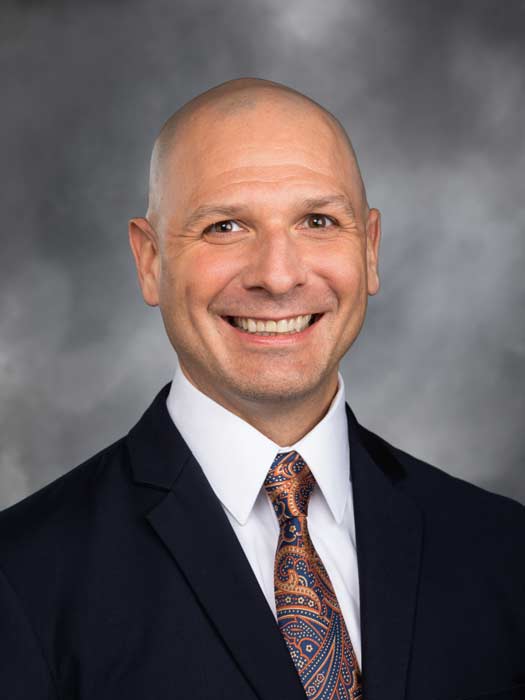
District 20 Representative Peter Abbarno
By Peter Abbarno
For the C-C Chamber of Commerce
Resiliency is more than a buzzword in Lewis County — it’s a way of life. From flooding in the Chehalis Basin to winter storms and economic uncertainty, our community understands that true resiliency isn’t just about responding after disaster strikes.
Resiliency means planning, investing wisely, and making decisions today that protect families, businesses, and communities tomorrow.
Recent flooding in the Chehalis Basin underscores that reality. While meaningful progress has been made toward long-term flood mitigation, these events remind us that resiliency requires sustained effort and continued investment. As assistant ranking member of the House Capital Budget Committee, I have worked to secure funding for the Chehalis Basin Flood Authority to advance critical flood-mitigation projects. Over my five years in the Legislature, I’ve seen firsthand how planning and persistence can reduce risk and save lives — but the work is far from finished.
Resiliency also means planning for recovery before a disaster occurs. That’s why I have sponsored and supported legislation focused on disaster response and recovery. In 2025, I sponsored and passed House Bill 1990, which helps utilities manage and recover disaster-related emergency costs while protecting customers from sudden and unaffordable rate spikes.
When storms or floods damage infrastructure, families should not be hit twice — first by the disaster, and then by their utility bills.
In 2024, I also cosponsored and passed House Bill 2020, creating a state-administered public infrastructure assistance program to help local governments and tribes repair critical infrastructure damaged during declared disasters. Roads, bridges, water systems, and utilities are essential to economic recovery and public safety. Planning for their repair before disaster strikes is a core component of resilient communities.
Disaster resiliency and infrastructure resiliency are closely tied to energy resiliency. When flooding, freezing temperatures, or windstorms hit, reliable electricity becomes a matter of public safety. Heat, clean water, communications, medical care, and emergency response all depend on a stable power grid. Unfortunately, recent state energy policies have weakened grid reliability and reduced Washington’s resilience.
In March 2024, the Northwest narrowly avoided rolling blackouts during a prolonged cold snap, with temperatures plunging into the teens statewide. I remember that moment vividly because I was on the House floor at 2:00 a.m. on March 5, fighting against the passage of HB 1589 — legislation that phased out natural gas, a reliable source of heat and energy, and banned it from new construction.
At the same time, nearly 1,200 megawatts of reliable generating capacity are being removed from the regional grid as state anti-fossil fuel laws take full effect, with no dependable replacement. That’s enough electricity to power more than 935,000 homes. More than 60 percent of that loss is tied to the TransAlta plant in Centralia.
While the Washington Democrat majority continues to eliminate energy options, electricity demand continues to rise due to electric vehicles and the push toward all-electric buildings. It should be evident that solar, wind, and even our abundant hydroelectric power alone are not enough to meet current or future demand.
That’s why recent news in Centralia matters. TransAlta announced it will convert its facility from coal to natural gas — a major step toward restoring energy resiliency. Additionally, the federal government issued an order keeping coal in the energy mix for the winter. What once appeared to be a permanent closure has become a second chance — preserving jobs, stabilizing the grid, supporting our community, and ensuring reliable power when it matters most.
Resiliency means being honest about risks, realistic about solutions, and proactive in planning. It means investing in flood mitigation, preparing for disaster recovery, and maintaining an energy system that works when we need it most. Lewis County has always been resilient. Our responsibility in Olympia is to match that resilience with policies that help our communities endure, adapt, and thrive — no matter what challenges lie ahead.
Rep. Peter Abbarno,
R-Chehalis, represents the 20th Legislative District and is the House Republican Caucus Chair.